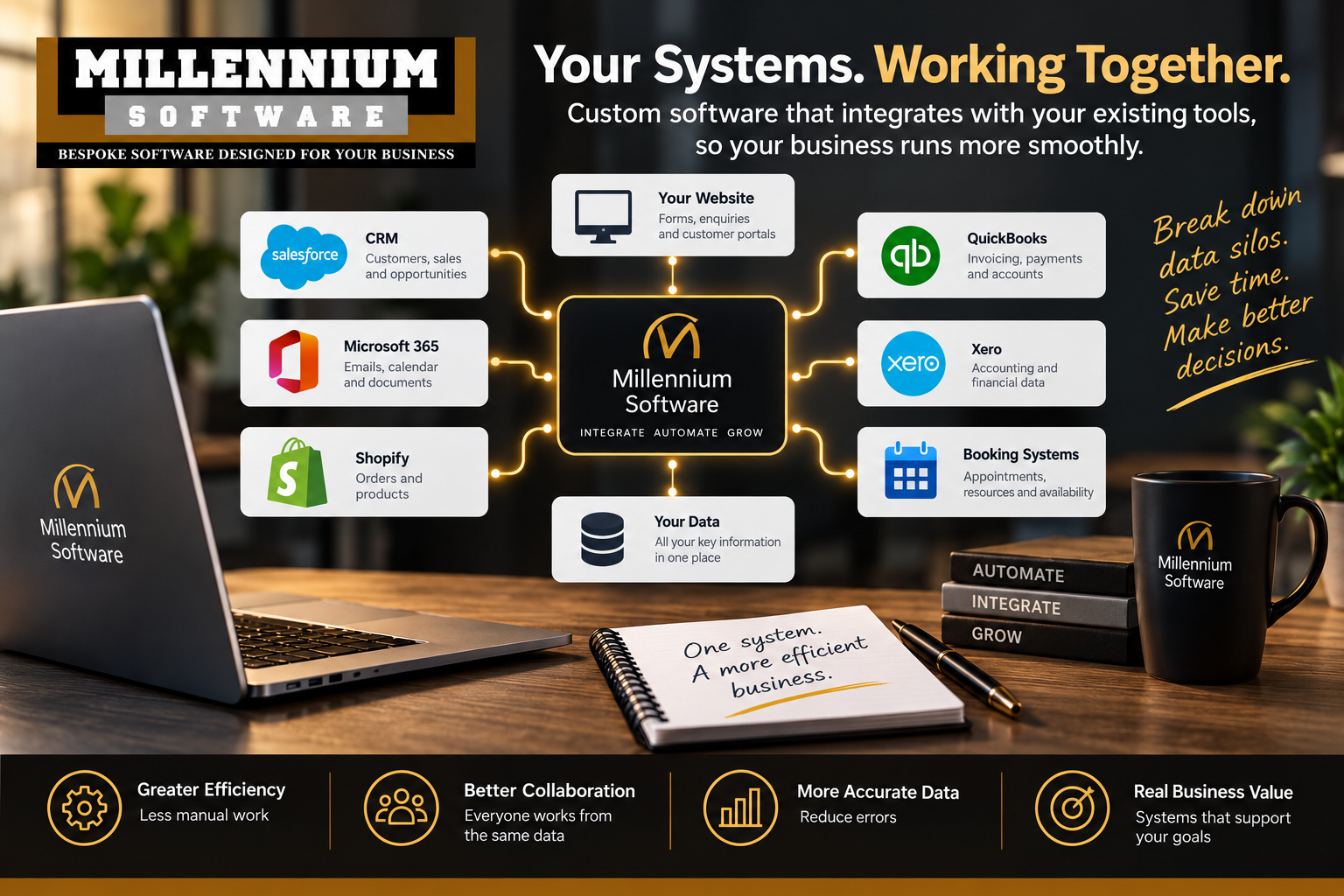
For many business owners and managers, the operational landscape can feel cluttered. If you’re grappling with disconnected systems, manual processes, or outdated software, you’re not alone. The question on your mind might be: how can custom software integrate with the systems I already rely on? At Millennium Software, we have nearly 30 years of experience in answering that very question, creating bespoke solutions tailored to your unique needs.
Understanding the Need for Integration
Businesses often operate with a mix of software solutions, from CRMs to invoicing tools. While each piece may serve its purpose, they can also create silos of information. For instance, your sales team might be using one system for customer management while the finance department relies on another for invoicing. This disconnect can lead to duplicated data entry, errors, and wasted time.
Integrating custom software allows you to break down these silos, creating a seamless flow of information between departments. By ensuring that different systems communicate effectively, you can reduce manual tasks and improve accuracy. Ultimately, this integration can lead to better decision-making and enhanced operational efficiency.
How Custom Software Works with Existing Systems
Custom software is designed to fit your unique operational workflows and existing technology stack. Rather than forcing you to adapt to generic solutions, bespoke software development allows for tailored features that work in harmony with your current systems. For example, if your team uses a specific CRM, your new software can be built to pull data from that CRM, ensuring that all departments are on the same page.
Moreover, Millennium Software provides access to live or staging versions of your system during development. This means you can test the integration in real-time, ensuring that everything functions as it should before going live. This feedback loop not only enhances the final product but also gives you peace of mind throughout the development process.
Real-World Application: A Day in the Life
Imagine a typical day in your business. Your sales team enters customer details into a CRM while the finance team generates invoices based on those details. However, each team is using separate systems, leading to discrepancies and confusion. Each team spends hours reconciling information, which could be better spent on their core responsibilities.
With bespoke software that integrates these systems, your sales team can enter customer details once, and the finance department can access that information in real time. This not only streamlines processes but also enhances collaboration between teams, ensuring everyone is working from the same data set.
Benefits of Custom Software Integration
Integrating custom software with existing systems offers several benefits. First, it can significantly improve efficiency by automating data entry and task management. Second, it enhances data accuracy, reducing the risk of errors that can arise from manual input. Finally, it allows for better reporting and analytics, as all your data is centralized and easily accessible.
Additionally, working directly with a developer like Steve Bodman means you have a straightforward line of communication, eliminating layers of sales teams or account managers. This direct approach can lead to a more nuanced understanding of your specific challenges and needs, resulting in a more effective solution.
Frequently asked questions
What types of systems can custom software integrate with?
Custom software can integrate with a variety of systems, including CRMs, invoicing tools, inventory management systems, and more. The key is to assess your current technology stack and identify the best integration points.
How long does it take to develop custom software?
The development timeline can vary based on complexity and requirements. However, at Millennium Software, we aim to provide a working version for testing in a fraction of that time, allowing for feedback and adjustments along the way.
What if my business needs change after development?
Custom software is designed to be flexible. If your business needs evolve, additional features can often be added, or existing functionalities can be adjusted to better suit your changing requirements.
How do I get started with bespoke software development?
The first step is to tell me what you are trying to solve. By discussing your specific challenges, we can begin to outline a tailored solution that best fits your business needs.
In conclusion, custom software integration can significantly enhance your business operations by improving efficiency, accuracy, and collaboration. If you're ready to explore how bespoke software can transform your existing systems, I invite you to get in touch for a conversation about your needs.